


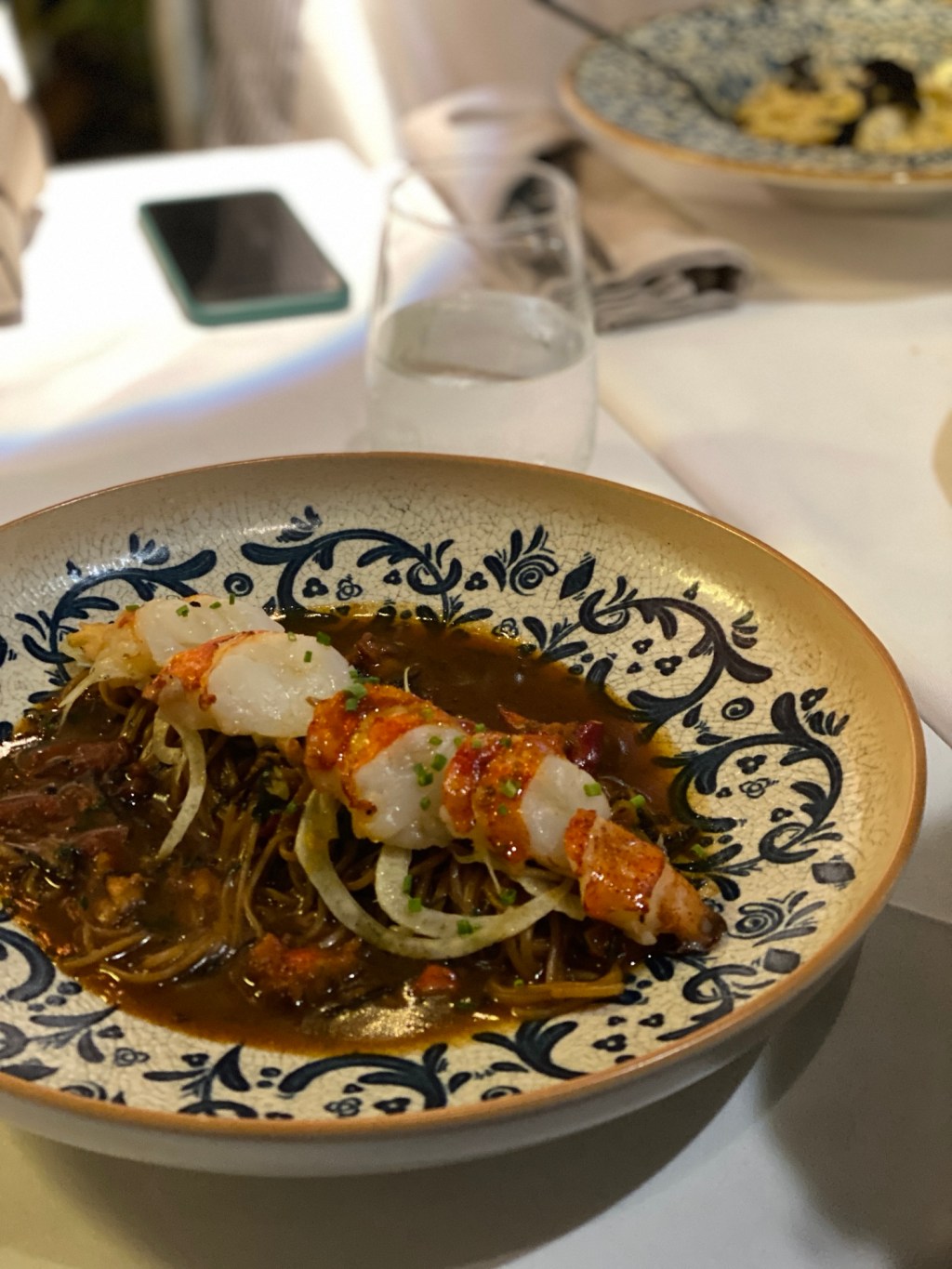
This Lobster Linguine dish is a luxurious and flavorful composition that showcases the best of seafood cuisine. The homemade semolina pasta provides a firm and slightly nutty base, perfectly complementing the succulent lobster meat. The lobster bisque, enriched with a mirepoix of onion, carrot, and celery, and finished with a touch of cream, adds a rich and velvety depth to the sauce. Kombu broth introduces a subtle umami note, enhancing the overall seafood flavor profile.
The dish is beautifully balanced with the sweetness of cherry tomatoes and the slight anise-like freshness of fennel, adding both color and a layer of complexity to the palate. The lobster, both in claw meat and a whole tail, serves as the star of the dish, offering a tender and luxurious bite that elevates the entire experience.
Garnished with fresh parsley, this Lobster Linguine is not just a meal but a celebration of fine ingredients and sophisticated flavors, making it a perfect choice for a special occasion or an indulgent treat.
Ingredients
For the Pasta:
- 2 cups semolina flour
- 1/2 teaspoon salt
- 3/4 cup water (adjust as needed)
For the Lobster Bisque:
- 1 whole lobster (about 1 1/2 pounds)
- 2 tablespoons olive oil
- 1 onion, chopped
- 1 carrot, chopped
- 1 celery stalk, chopped
- 2 tablespoons tomato paste
- 1/4 cup brandy or cognac
- 4 cups seafood or fish stock
- 1 bay leaf
- 1 sprig of thyme
- 1/2 cup heavy cream
- Salt and pepper to taste
For the Kombu Broth:
- 4 cups water
- 1 piece of kombu (about 10 inches long)
For the Linguine:
- 1/2 cup cherry tomatoes, halved
- 1/2 fennel bulb, thinly sliced
- Lobster claw meat (from the whole lobster)
- Lobster tail (from the whole lobster)
- Salt and pepper to taste
- Olive oil for cooking
- Fresh parsley, chopped (for garnish)
Instructions
1. Make the Pasta:
- In a large bowl, mix the semolina flour and salt.
- Gradually add water, mixing until a dough forms. Knead for about 10 minutes or until smooth.
- Wrap the dough in plastic wrap and let it rest for 30 minutes.
- Roll out the dough into thin sheets using a pasta machine or a rolling pin. Cut into linguine strands. Set aside.
2. Cook the Lobster:
- Bring a large pot of salted water to a boil. Add the whole lobster and cook for about 5-7 minutes.
- Remove the lobster and let it cool. Reserve the cooking water.
- Extract the meat from the claws and tail. Set aside the meat and shells.
3. Make the Lobster Bisque:
- In a large pot, heat the olive oil. Add the onion, carrot, and celery, and cook until softened.
- Add the lobster shells and tomato paste, and cook for a few minutes.
- Deglaze with brandy or cognac.
- Add the seafood stock, bay leaf, and thyme. Simmer for about 30 minutes.
- Strain the soup, discarding the solids. Return the soup to the pot, add the cream, and season with salt and pepper. Keep warm.
4. Make the Kombu Broth:
- In a pot, bring the water to a simmer. Add the kombu and let it steep for about 10 minutes. Remove the kombu and keep the broth warm.
5. Cook the Linguine:
- Bring a large pot of salted water to a boil. Cook the linguine until al dente, about 2-3 minutes.
- In a large pan, heat some olive oil. Add the cherry tomatoes and fennel, and sauté for a few minutes.
- Add the lobster claw meat, lobster tail, and cooked linguine to the pan. Toss with some of the kombu broth and lobster bisque. Season with salt and pepper.
6. Serve:
- Plate the linguine, topping it with the lobster tail and garnishing with fresh parsley.
- Serve with additional lobster bisque on the side.









 Simply Cooking!
Leave a comment