


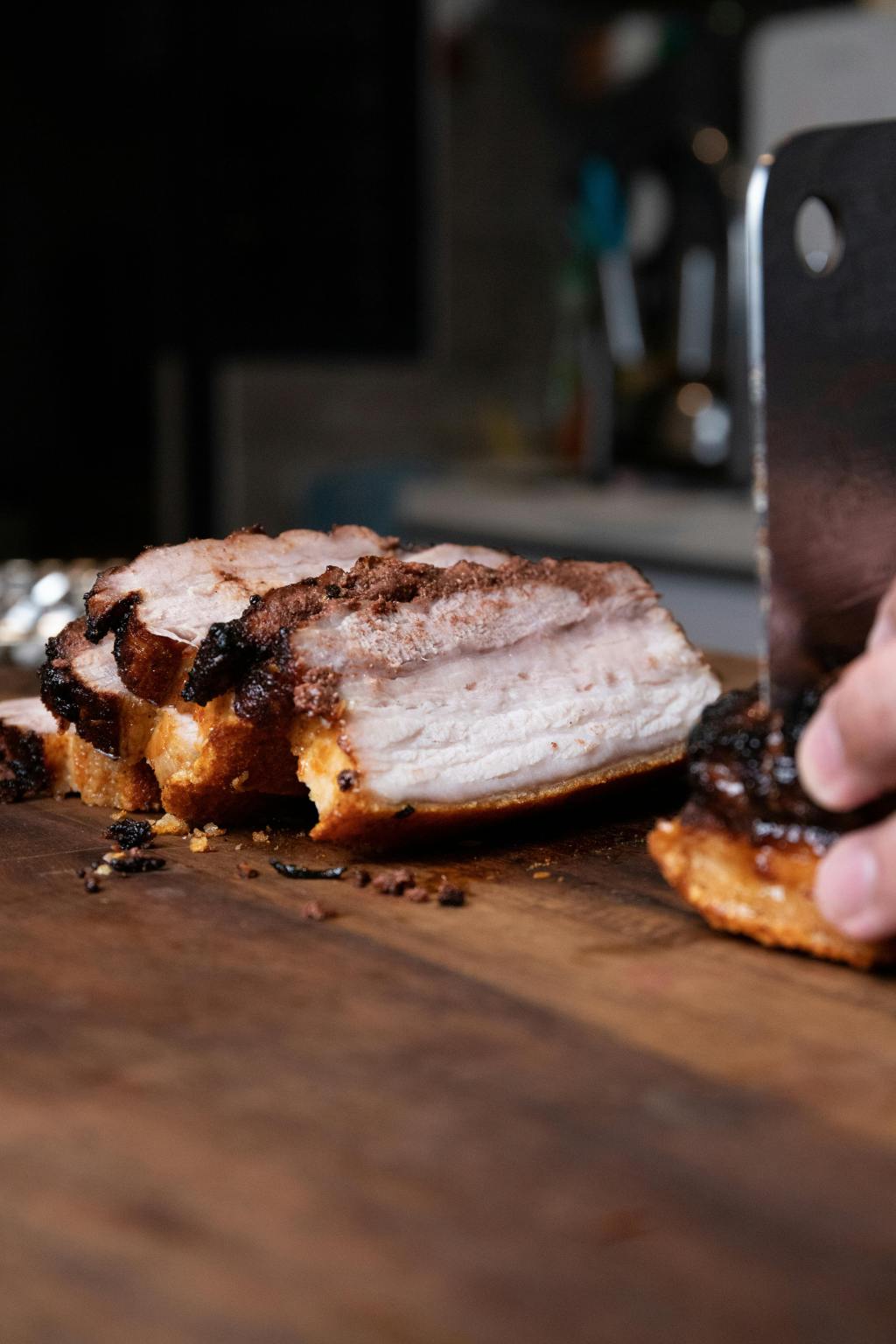
Roasted pork belly is a popular dish across many cultures, prized for its contrast between the crispy, crunchy crackling skin and the succulent, flavorful meat underneath. The preparation and techniques can vary slightly depending on the region, but the goal remains the same: tender, juicy pork meat with perfectly crispy skin.
Advertisements
Key Features of Roasted Pork Belly:
- Crispy Skin (Crackling):
- The skin of the pork belly, when roasted properly, transforms into crispy crackling. Achieving this involves scoring the skin (to allow fat to render and the skin to puff up) and drying it out thoroughly before cooking. Salt plays a vital role here, drawing moisture out of the skin to help it crisp up.
- Many recipes include an initial blast of high heat to start the crisping process, followed by a slower roast to tenderize the meat.
- Juicy, Tender Meat:
- Pork belly contains a good amount of fat, which melts during roasting, keeping the meat tender and flavorful. The fat adds richness to the dish, making it decadent and satisfying.
- The slow roasting process allows the fat to render out and the connective tissues to break down, resulting in juicy, melt-in-your-mouth meat.
- Flavoring and Seasoning:
- While the preparation of pork belly is simple, flavoring is usually added to the meat side (the underside), leaving the skin primarily seasoned with salt to ensure crispiness.
- Popular flavorings include garlic, rosemary, thyme, fennel, and other aromatic herbs. Some recipes use spice rubs, while others go for marinades that can include soy sauce, honey, vinegar, or mustard.
- In some cultures, it’s common to add a sweet glaze (such as honey or hoisin sauce) towards the end of roasting to balance the richness with a touch of sweetness.
Global Variations:
- Chinese-Style Roasted Pork Belly (Siu Yuk):
- One of the most famous pork belly preparations is the Cantonese “Siu Yuk.” This Chinese roasted pork belly has an incredibly crunchy skin, often achieved by hanging the pork belly in the air to dry for hours before roasting. The meat is seasoned with five-spice powder, soy sauce, and Shaoxing wine.
- Filipino Lechon Kawali:
- In the Philippines, roasted pork belly is known as Lechon Kawali. The pork belly is first boiled with seasonings and then deep-fried to achieve crispy skin and tender meat. It’s usually served with a dipping sauce made of soy sauce, vinegar, and garlic or liver-based sauces.
- Korean Bossam:
- In Korea, Bossam is a dish where pork belly is boiled rather than roasted, often flavored with garlic, ginger, and soy sauce, and then sliced thin. It is served with side dishes like kimchi and ssamjang (a spicy dipping sauce) and is wrapped in lettuce or cabbage leaves.
- British Pork Belly Roast:
- In British cuisine, roasted pork belly is a beloved Sunday roast dish, where it’s often served with roasted potatoes, vegetables, and a rich gravy. The crackling is a highlight, and it’s seasoned simply with salt and sometimes herbs like thyme or sage.
- Italian Porchetta:
- Porchetta is an Italian-style roasted pork belly, typically rolled with herbs like rosemary, fennel seeds, garlic, and lemon zest. It’s slow-cooked to perfection, and the skin is rendered crispy. Porchetta can be served as a roast or sliced for sandwiches.
Best Cooking Methods for Pork Belly:
- Slow-Roasting:
This is the classic technique. By cooking the pork belly at a low temperature for a long time, the fat renders out, and the meat becomes incredibly tender. The skin is exposed to high heat either at the beginning or the end of the roasting process to achieve crackling. - Sous Vide:
A modern technique that involves vacuum-sealing the pork belly and cooking it at a precise low temperature for an extended period (usually 12-24 hours). Afterward, the skin is crisped by broiling or searing it at high heat. This method guarantees very tender meat while still allowing for crispy skin. - Frying (Lechon Kawali or Crispy Pork Belly):
In some preparations, the pork belly is fried instead of roasted. The belly is boiled first to tenderize the meat and then deep-fried to get that crispy skin. This technique is popular in many Asian countries.
Serving Suggestions:
- Accompaniments:
Roasted pork belly is often served with vegetables like roasted carrots, potatoes, or parsnips. A fresh salad or pickled vegetables can help cut through the richness of the meat. In some cuisines, pork belly is paired with rice or soft bread. - Sauces:
A tangy or acidic sauce, like apple sauce or a vinegar-based dipping sauce, pairs well with the richness of pork belly. For more savory options, a mustard-based or herb sauce complements the flavors beautifully.
Here’s a delicious Roasted Pork Belly recipe that delivers crispy crackling on top with tender, juicy meat inside:
Ingredients:
- 2 lbs (900g) pork belly, skin on
- 2 tablespoons olive oil
- 1 tablespoon coarse sea salt
- 1 teaspoon black pepper
- 3 cloves garlic, minced
- 2 teaspoons fennel seeds (optional, for extra flavor)
- 1 tablespoon fresh rosemary, chopped
- 1 tablespoon fresh thyme, chopped
- 1 tablespoon apple cider vinegar (to dry out the skin)
Instructions:
- Prepare the pork belly:
- Preheat your oven to 450°F (230°C).
- Pat the pork belly dry using paper towels. This step is crucial to achieving crispy crackling.
- Score the skin using a sharp knife, cutting deep enough to go through the skin but not into the meat. Make parallel cuts about ½ inch apart. This helps the skin to crisp up.
- Season the pork belly:
- Rub the entire pork belly with apple cider vinegar, especially over the skin.
- Mix the minced garlic, rosemary, thyme, fennel seeds, salt, and pepper in a small bowl. Rub this mixture on the underside of the pork belly (the meat side), leaving the skin clean to focus on crispiness.
- Coat the skin with olive oil and sprinkle generously with coarse sea salt. The salt helps draw out moisture and promotes a crunchy texture.
- Roast the pork:
- Place the pork belly on a roasting rack in a roasting pan, skin side up. This helps air circulate around the pork and ensures even cooking.
- Roast in the oven at 450°F (230°C) for the first 25-30 minutes. This high heat helps to crisp the skin.
- Lower the temperature:
- After 30 minutes, reduce the oven temperature to 350°F (175°C) and continue roasting for another 1½ to 2 hours, or until the pork is tender, and the skin is crispy.
- If the skin is not crispy enough, turn the oven back to 450°F for the last 10-15 minutes, keeping a close eye to avoid burning.
- Rest and serve:
- Remove the pork belly from the oven and let it rest for about 10-15 minutes before slicing. Resting allows the juices to redistribute and keeps the meat moist.
- Slice and enjoy:
- Cut the pork belly into thick slices, making sure to include some of the crispy crackling in each piece. Serve with your favorite sides such as roasted vegetables, mashed potatoes, or a fresh salad.
Optional Tips:
- You can marinate the pork belly in the garlic and herb mixture overnight to enhance the flavor even further.
- For extra crispy crackling, some cooks suggest rubbing baking soda on the skin along with the salt for added crunchiness, but be sure to rinse it off before cooking.
This roasted pork belly delivers a perfect balance of crispy skin and melt-in-your-mouth tender meat, making it a showstopper at any meal!
Advertisements



 Simply Cooking!
Leave a comment