


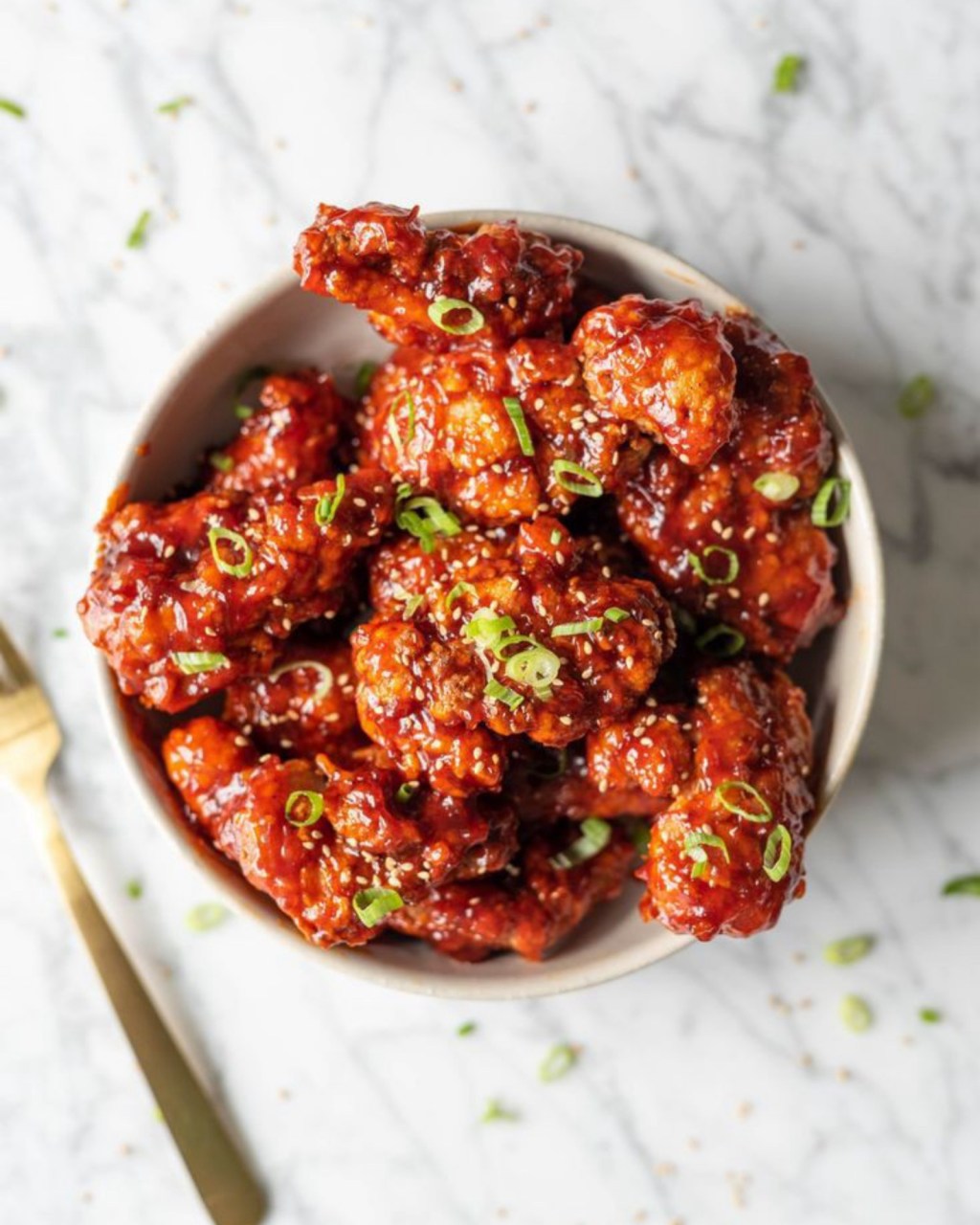
Korean fried chicken is a popular dish in Korean cuisine, known for its extra-crispy coating and bold flavors. It differs from other fried chicken styles in a few key ways:
- Double frying: The chicken is typically fried twice, which makes it extra crispy on the outside while keeping the meat juicy and tender on the inside. The second fry removes excess oil, creating a lighter and crunchier texture.
- Sauces and flavors: Korean fried chicken is often coated in a variety of flavorful sauces. The most common is Yangnyeom sauce, which is a mix of sweet, spicy, and tangy flavors made from ingredients like gochujang (Korean red chili paste), soy sauce, garlic, sugar, and vinegar. Other variations include soy-garlic or honey butter sauces.
- Lighter batter: The batter or coating for Korean fried chicken often uses potato starch or cornstarch to achieve a thin, crispy layer without being too heavy.
Korean fried chicken is often served with pickled radishes, beer (referred to as “chimaek” – a combination of chicken and beer), and sometimes side dishes like coleslaw or fries. It has become immensely popular worldwide for its crispy texture and bold, flavorful sauces.
Here’s a recipe for Korean Fried Chicken (Yangnyeom Chicken), which is known for its crispy texture and flavorful, spicy sauce. This recipe includes both the frying process and how to make the classic sweet and spicy Korean sauce.
INGREDIENTS
For the Chicken:
- 1 ½ lbs (about 680g) chicken wings or drumettes
- 1 teaspoon salt
- ½ teaspoon black pepper
- 1 cup cornstarch or potato starch (for extra crispiness)
- Vegetable oil (for frying)
For the Sauce (Yangnyeom Sauce):
- 2 tablespoons gochujang (Korean red chili paste)
- 2 tablespoons ketchup
- 1 tablespoon soy sauce
- 1 tablespoon rice vinegar (or apple cider vinegar)
- 2 tablespoons honey or corn syrup
- 1 tablespoon brown sugar
- 1 tablespoon minced garlic
- 1 teaspoon sesame oil
- Sesame seeds (for garnish)
HERE’S HOW YOU MAKE IT
1. Prepare the Chicken:
- Clean and pat dry the chicken wings or drumettes.
- Season the chicken with salt and pepper.
- Let the chicken rest for about 10-15 minutes.
2. Coat the Chicken:
- Coat each piece of chicken evenly with cornstarch or potato starch. Shake off any excess starch.
3. Fry the Chicken (Double-Fry for Extra Crispiness):
- Heat enough vegetable oil in a deep pan or pot to cover the chicken pieces. Heat the oil to around 350°F (175°C).
- Fry the chicken in batches to avoid overcrowding the pan. Fry the chicken for about 5-7 minutes until lightly golden.
- Remove the chicken and place it on a rack or paper towels to drain excess oil.
- Increase the oil temperature to around 375°F (190°C). Fry the chicken a second time for 2-3 minutes until crispy and deep golden brown.
- Drain the chicken again and set aside.
4. Make the Sauce:
- In a small saucepan, combine gochujang, ketchup, soy sauce, rice vinegar, honey, brown sugar, minced garlic, and sesame oil. Heat the mixture over medium heat, stirring constantly until it thickens and becomes glossy (about 3-5 minutes).
- Adjust the sweetness or spiciness to your taste by adding more honey or gochujang.
5. Coat the Chicken:
- Place the fried chicken in a large mixing bowl.
- Pour the sauce over the chicken and toss well until each piece is evenly coated.
6. Garnish and Serve:
- Sprinkle sesame seeds over the chicken for garnish.
- Serve the Korean fried chicken hot, with pickled radishes or a side of rice.
Enjoy your crispy and flavorful Korean fried chicken!



 Simply Cooking!
Leave a comment