


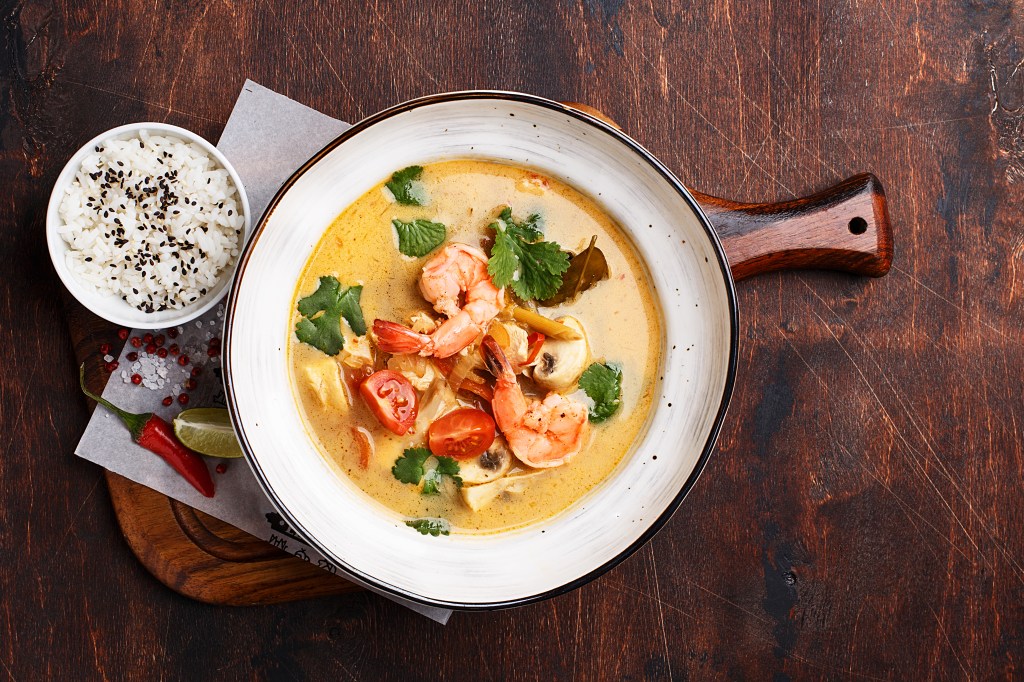
It’s known for its bold, layered flavors—spicy, sour, salty, and slightly sweet—and for its added richness from coconut milk or evaporated milk, which differentiates it from the clear version, Tom Yum Goong Nam Sai.
Here’s a breakdown of its main elements:
- Shrimp (Goong): The soup is traditionally made with large, fresh shrimp, which lends a briny sweetness that balances the soup’s spicy and sour profile.
- Creamy Base (Nam Khon): The addition of coconut milk or sometimes evaporated milk (depending on the region and cook’s preference) adds a creamy, velvety texture. The word “Nam Khon” translates to “creamy broth” in Thai.
- Herbs and Aromatics:
- Lemongrass: Adds a bright citrusy aroma.
- Galangal: A relative of ginger, it has a unique peppery and floral note.
- Kaffir Lime Leaves: Adds a fresh, aromatic citrus flavor that’s distinctly Thai.
- Seasoning:
- Fish Sauce: Brings a salty, umami depth.
- Thai Bird’s Eye Chilies: Adds heat, which can be adjusted to taste.
- Lime Juice: Provides the sour note, essential in balancing the creamy broth.
- Vegetables: Mushrooms (often straw or oyster mushrooms) are usually added, along with tomatoes, which add a slight sweetness.
This soup is enjoyed on its own or with jasmine rice and is a popular choice in Thai restaurants due to its rich flavor profile and comforting texture and here’s how you make it!
INGREDIENTS
- 500 ml (2 cups) water or shrimp stock
- 200 ml (1 cup) coconut milk (preferably full-fat)
- 300g (10 oz) fresh shrimp, peeled and deveined, with tails on
- 1 stalk lemongrass, smashed and cut into 2-inch pieces
- 5-6 kaffir lime leaves, torn
- 3-4 slices galangal root (fresh is best)
- 200g (1 cup) mushrooms, halved (preferably straw or oyster mushrooms)
- 2-3 Thai bird’s eye chilies, lightly smashed (adjust to taste)
- 2-3 tbsp fish sauce (to taste)
- 1-2 tbsp lime juice (to taste)
- 1-2 tsp sugar (optional, to taste)
- 2-3 cherry tomatoes, halved (optional)
- Fresh cilantro leaves, for garnish
INSTRUCTIONS
- Prepare the Broth:
- In a large pot, bring the water or shrimp stock to a simmer over medium heat.
- Add the lemongrass, kaffir lime leaves, and galangal. Let these simmer for 5-10 minutes to infuse the broth with their aromatic flavors.
- Add Coconut Milk and Mushrooms:
- Stir in the coconut milk and bring it back to a simmer (do not boil, as boiling can cause the coconut milk to separate).
- Add the mushrooms and cherry tomatoes (if using), and simmer for another 3-4 minutes.
- Add Shrimp:
- Add the shrimp to the pot and cook for 2-3 minutes or until they turn pink and are cooked through. Be careful not to overcook, as shrimp can become tough.
- Season the Soup:
- Add the fish sauce and sugar (if using) to taste. Then, add the Thai chilies for heat and simmer for a few minutes.
- Finish with Lime Juice:
- Just before serving, add the lime juice to bring out the soup’s signature sour note. Adjust lime juice and fish sauce to balance the flavors to your taste.
- Serve:
- Ladle the soup into bowls, making sure each serving has a good amount of shrimp, mushrooms, and herbs. Garnish with fresh cilantro leaves.
Tips for the Perfect Tom Yum Goong Nam Khon
- Fresh Galangal and Kaffir Lime Leaves: These are key to achieving authentic flavor.
- Balance of Flavors: Traditional Thai cooking focuses on balancing salty, sour, spicy, and sweet. Adjust the fish sauce, lime juice, and chili to your preferred taste.
This creamy version of Tom Yum Goong is perfect for those who love the classic hot and sour soup but enjoy a little added richness from the coconut milk. Enjoy!









 Simply Cooking!
Leave a comment