


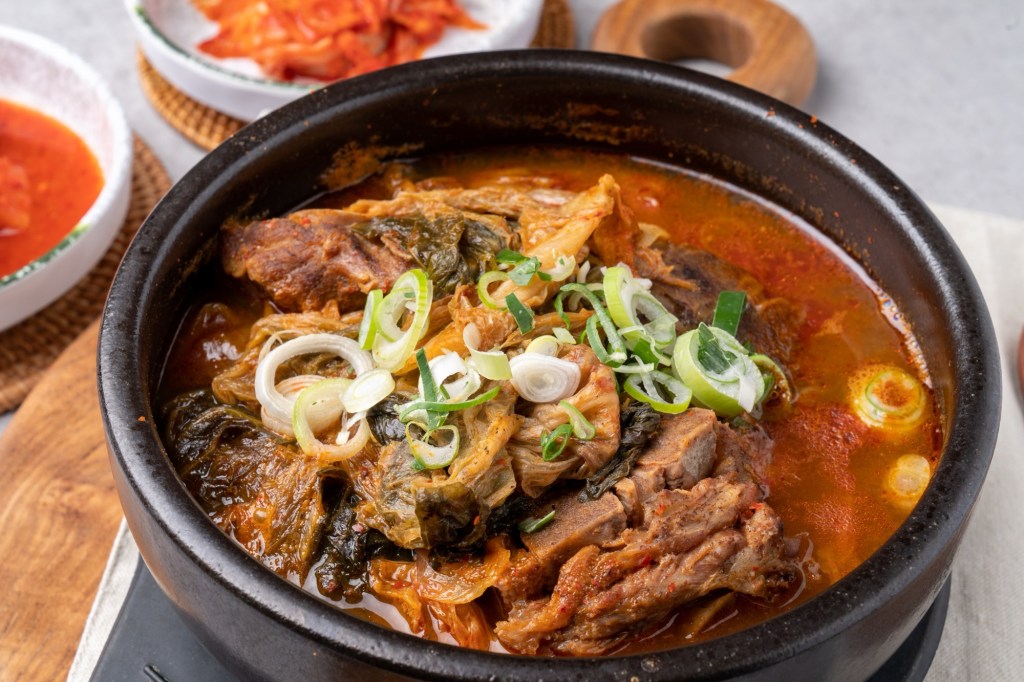
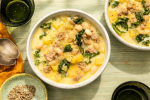
Yangpyeong Haejangguk, or Yangpyeong Hangover Soup, is a traditional Korean dish renowned for its hearty and restorative qualities. Originating from Yangpyeong County in South Korea, this soup is traditionally crafted using fresh beef blood pudding (seonji) and beef tripe, following time-honored cooking methods to deliver an authentic and savory flavor.
The soup’s rich broth is typically infused with a blend of vegetables, including bean sprouts and cabbage, and seasoned with red pepper oil and other spices to achieve a spicy and robust taste. This combination not only enhances the flavor but also contributes to its reputation as an effective remedy for hangovers.
For those interested in experiencing Yangpyeong Haejangguk firsthand, it is a staple in many Korean restaurants, particularly in Seoul’s Jongno-gu district. Establishments like the Yangpyeong Hangover Cure Soup Speciality are well-known for serving this traditional dish.
If you prefer to enjoy this soup at home, ready-made versions are available for purchase. Products such as “The Masterpiece Yangpyeong Hangover Soup” offer a convenient way to savor this hearty meal, featuring ingredients like beef intestines, beef bone broth, and fresh vegetables.
Whether enjoyed at a local eatery or prepared in your own kitchen, Yangpyeong Haejangguk offers a flavorful and nourishing experience deeply rooted in Korean culinary tradition.
Servings: 4 | Prep Time: 20 min | Cook Time: 2.5 hours
Ingredients:
- 500g beef tripe (omasum or honeycomb tripe)
- 300g beef brisket
- 200g seonji (beef blood pudding) optional
- 1 large Korean radish (mu), sliced
- 1 medium onion, halved
- 5 cloves garlic, smashed
- 1 thumb-sized piece of ginger, sliced
- 2 stalks green onion, cut into 2-inch pieces
- 2 tbsp doenjang (fermented soybean paste)
- 1 tbsp gochugaru (Korean red pepper flakes)
- 1 tbsp soy sauce
- 1 tbsp fish sauce
- 1 tsp salt (adjust to taste)
- ½ tsp black pepper
- 1 tbsp perilla seed powder (optional, for nutty flavor)
- 1 cup bean sprouts
- 1 small Napa cabbage, chopped
For Serving:
- Sliced green onions
- Red pepper oil or sesame oil
- Steamed rice
Instructions:
- Clean the tripe
- Rinse the beef tripe thoroughly under cold water.
- Rub it with salt and flour, then rinse again.
- Blanch the tripe in boiling water for 5 minutes, then rinse in cold water. Slice into thin strips.
- Make the broth
- In a large pot, add 10 cups of water, beef brisket, radish, onion, garlic, ginger, and green onions.
- Bring to a boil, reduce heat, and simmer for 1.5 hours. Skim off any impurities.
- Prepare the beef
- Remove the brisket, let it cool, then slice into thin pieces. Discard the onion and ginger.
- Return the radish to the pot, mashing it slightly for a richer broth.
- Season the broth
- Add doenjang, gochugaru, soy sauce, fish sauce, salt, black pepper, and perilla seed powder (if using).
- Stir well and let it simmer for another 15 minutes.
- Assemble the soup
- Add the cleaned tripe, sliced brisket, bean sprouts, and cabbage. Simmer for another 15-20 minutes.
- If using seonji (blood pudding), gently add it in the last 5 minutes to warm through.
- Serve
- Ladle into bowls and top with sliced green onions. Drizzle with red pepper oil or sesame oil.
- Enjoy with steamed rice and kimchi on the side.
Notes & Tips:
- Make it richer: Some recipes use beef bone broth for a deeper umami flavor.
- Spicy variation: Add fresh chili or more gochugaru for extra heat.
- Authenticity: In Korea, this soup is known for its rich, earthy taste from the tripe and blood pudding, but you can omit the seonji if you prefer.






 Simply Cooking!
Leave a comment