


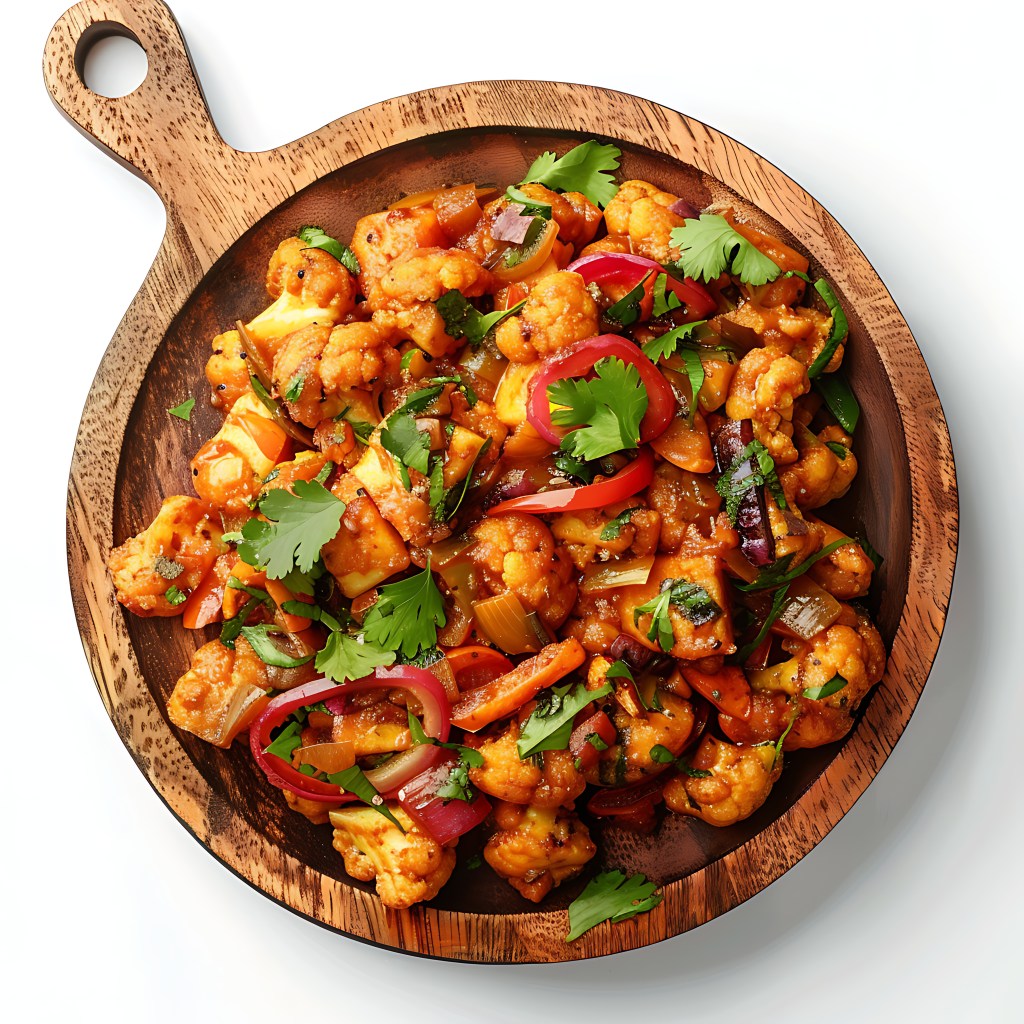
Gobi Masala is a traditional Indian dish featuring cauliflower (gobi) cooked in a richly spiced, tomato-based gravy. It’s a beloved vegetarian recipe, often found in North Indian households and restaurants. The term “masala” refers to the mix of aromatic spices that forms the backbone of the dish, creating a flavorful, comforting, and slightly spicy curry.
Cultural and Culinary Significance
1. Staple Vegetarian Dish:
India has a strong tradition of vegetarian cooking, and cauliflower is a popular vegetable in Indian kitchens due to its versatility and ability to absorb flavors. Gobi Masala is a staple dish, especially in regions where vegetarianism is predominant.
2. North Indian Roots:
While variations exist across India, the dish is most commonly associated with North Indian cuisine, known for its hearty, spiced gravies. It’s a regular feature in meals during the winter months, as cauliflower is a seasonal vegetable harvested in cooler climates.
3. Home-Style vs. Restaurant-Style:
• Home-Style Gobi Masala is typically lighter, with fewer spices and minimal cream or fat, making it a wholesome, everyday dish.
• Restaurant-Style Gobi Masala tends to be richer, with the addition of cashew or almond paste, butter, and cream, giving it a luxurious feel.
4. Regional Variations:
• In Punjab, you might find it with a buttery tomato gravy and garnished with cream.
• In Southern India, the spices might include curry leaves and coconut milk for a different flavor profile.
• Some cooks stir-fry the cauliflower before adding it to the gravy, while others blanch it for a lighter dish.
Key Ingredients and Spices
• Cauliflower: The star of the dish, cut into florets and either fried or blanched.
• Tomatoes and Onions: The base for the gravy, providing sweetness and acidity.
• Spices: A typical spice blend includes turmeric, red chili powder, cumin, coriander, and garam masala.
• Cashews or Almonds: Often used to create a creamy texture and balance the heat of the spices.
• Kasuri Methi: Dried fenugreek leaves, a hallmark of North Indian gravies, add an earthy aroma and slight bitterness.
Serving Context
Gobi Masala is a versatile dish that pairs well with:
• Flatbreads: Roti, naan, or paratha.
• Rice Dishes: Steamed basmati rice or jeera (cumin) rice.
• Sides: Raita (yogurt-based side dish), pickles, or papad.
Modern Adaptations
In recent years, variations of Gobi Masala have emerged to suit contemporary tastes and dietary preferences. For instance:
• Vegan Versions: Made with coconut milk or almond cream instead of dairy cream.
• Healthier Takes: Using air-fried cauliflower for a lighter texture.
• Fusion Recipes: Incorporating Gobi Masala flavors into tacos, wraps, or even pizzas.
Why It’s Special
Gobi Masala is a quintessential example of how Indian cuisine elevates simple, everyday vegetables with the magic of spices and traditional cooking techniques. It represents the balance of flavors—spicy, tangy, and creamy—that Indian food is celebrated for.
HERE’S HOW YOU MAKE IT!
For the Cauliflower (Gobi):
• 1 medium cauliflower (cut into medium florets)
• 1 tsp turmeric powder
• Salt (to taste)
• Water (for blanching and frying)
• 2 tbsp mustard oil (or any cooking oil)
For the Nut Puree:
• 12-15 cashews or almonds (soaked in hot water for 15-20 minutes)
• 3-4 tbsp water (for blending)
For the Masala Gravy:
• 2 tbsp ghee or mustard oil
• 1 tsp cumin seeds
• 1 bay leaf
• 1 medium onion (finely chopped)
• 2-3 garlic cloves (finely minced)
• 1-inch ginger (grated)
• 2 medium tomatoes (pureed)
• 1-2 green chilies (slit lengthwise)
• ½ tsp turmeric powder
• 1 tsp red chili powder
• 1 tsp coriander powder
• ½ tsp roasted cumin powder
• ½ tsp garam masala
• ¼ tsp kasuri methi (dried fenugreek leaves, crushed)
• 2 tbsp yogurt (whisked) or 2 tbsp fresh cream (optional)
• Salt (to taste)
Garnish:
• Fresh coriander leaves (finely chopped)
• A squeeze of fresh lemon juice
INSTRUCTIONS
1. Prepare the Cauliflower:
• Bring a pot of water to a boil, add turmeric powder and salt, then blanch the cauliflower florets for 5 minutes. Drain and pat dry.
• Heat mustard oil until it reaches its smoking point, reduce the heat, and lightly fry the cauliflower florets until golden. Set aside.
2. Make the Nut Puree:
• Blend the soaked cashews or almonds with water into a smooth paste. Set aside.
3. Prepare the Masala Gravy:
• Heat ghee or mustard oil in a heavy-bottomed pan. Add cumin seeds and bay leaf, letting them splutter and release their aroma.
• Add the finely chopped onions and sauté until golden brown.
• Stir in the garlic, ginger, and green chilies. Sauté until the raw aroma disappears.
• Add the tomato puree, and cook on medium heat until the oil separates from the masala (8-10 minutes). This step is crucial for depth of flavor.
• Add turmeric, red chili powder, coriander powder, roasted cumin powder, and salt. Mix well and cook for another minute.
4. Incorporate the Nut Puree:
• Lower the heat and stir in the cashew or almond paste. Cook for 3-4 minutes, stirring continuously to avoid curdling and to enhance the creamy texture.
5. Cook the Cauliflower:
• Add the fried cauliflower florets to the gravy, ensuring they are well-coated.
• Cover and simmer on low heat for 10 minutes, allowing the flavors to meld together.
6. Finish the Dish:
• Sprinkle garam masala and crushed kasuri methi. Stir gently.
• If desired, mix in whisked yogurt or fresh cream for added richness.
• Adjust salt and add a splash of water if the gravy is too thick.
7. Garnish:
• Garnish with freshly chopped coriander leaves and a squeeze of fresh lemon juice for a burst of freshness.
Pro Tips for Authenticity:
• Use mustard oil for frying the cauliflower and preparing the masala for a more traditional flavor.
• Slow-cook the gravy to allow the spices to fully develop.
• Avoid overcooking the cauliflower to retain a slight crunch, ensuring a perfect texture.
Serving Suggestions
• Serve this Authentic Gobi Masala with soft phulkas, naan, or steamed basmati rice.
• Pair it with a side of cucumber raita or kachumber salad for a complete Indian meal.
ENJOY!










 Simply Cooking!
Leave a comment