


Allergens: Soy | Gluten-Free | Dairy-Free | Nut-Free | Vegan Adaptable
Cuisine: Japanese
Follow on Instagram: @simplycookingx
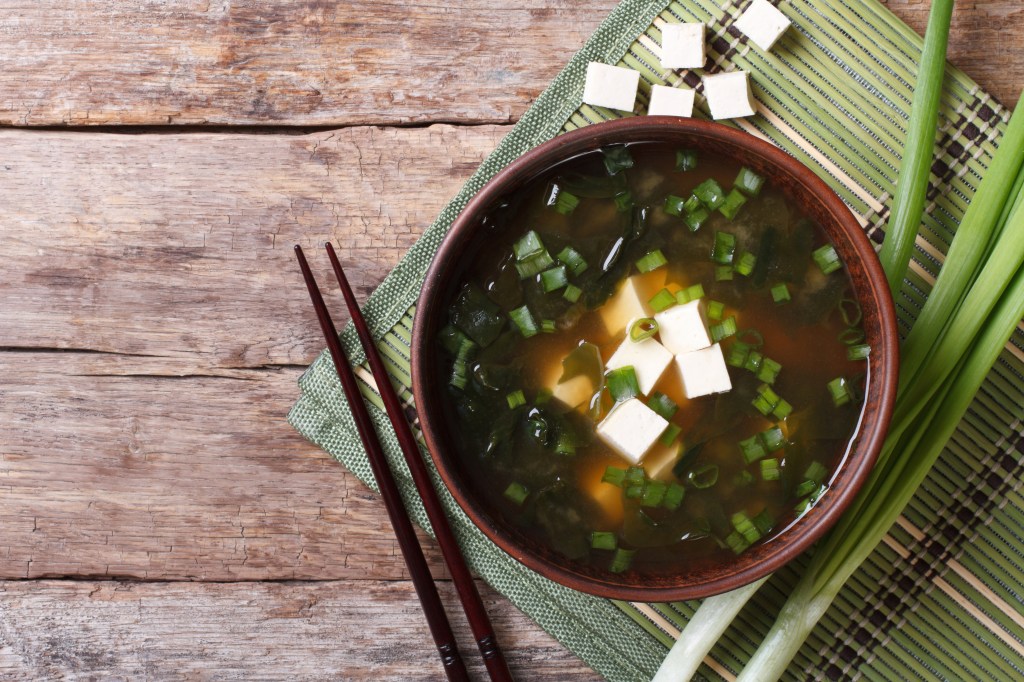
Miso Soup (味噌汁) is one of the cornerstones of Japanese cuisine, traditionally served at breakfast and throughout the day. The dish is built on dashi, a light broth made from kombu (kelp) and bonito flakes, to which miso paste is whisked in. Tofu and wakame seaweed are the most common additions, symbolizing balance and nourishment. Miso soup represents washoku — the Japanese philosophy of harmony in food — combining savory umami, gentle saltiness, and clean simplicity.
Ingredients (Serves 3–4)
- 4 cups water
- 1 piece kombu (kelp), 4×4 inches
- 1 cup bonito flakes (omit for vegan version)
- 3 tbsp miso paste (white or red, gluten-free if needed)
- ½ cup tofu, cubed
- 2 tbsp dried wakame seaweed, rehydrated
- 2 scallions, finely sliced
- (Optional: mushrooms, spinach, or shredded daikon)
Instructions
- Make the Dashi (Broth)
- In a pot, combine water and kombu. Heat gently until just before boiling, then remove kombu.
- Add bonito flakes, simmer 2 minutes, then strain. (For vegan broth, skip bonito flakes and use kombu only.)
- Add the Tofu and Seaweed
- Return broth to pot, add rehydrated wakame and tofu. Heat through (do not boil).
- Whisk in the Miso
- In a small bowl, dissolve miso paste with a bit of warm broth, then stir back into the pot off-heat.
- Serve
- Garnish with scallions. Serve immediately while hot.
Kitchen Equipment
- Small saucepan or pot
- Fine mesh strainer
- Ladle
- Knife and cutting board
- Measuring cups and spoons
- Serving bowls
Dietary Substitutions & Allergen Swaps
- Vegan: Use kombu-only broth and vegan miso.
- Soy-Free: Substitute chickpea miso and omit tofu.
- Low-Sodium: Use less miso or dilute with extra broth.
- Protein Boost: Add edamame or soft-boiled egg (non-vegan).
Chef’s Tips
- Never Boil Miso: High heat kills beneficial probiotics and changes the flavor.
- Use Good Broth: Dashi quality defines the soup’s depth.
- Balance the Salt: Adjust miso amount based on personal preference.
Wine Pairing
Pair with sake, dry Riesling, or Chablis. Non-alcoholic: green tea, sparkling water with yuzu, or cold barley tea (mugicha).
Nutrition Facts
Serving Size: 1 cup (approx. 250ml)
Servings Per Recipe: 4
| Nutrient | Amount Per Serving |
|---|---|
| Calories | 85 kcal |
| Total Fat | 3 g |
| – Saturated Fat | 0.5 g |
| – Trans Fat | 0 g |
| Cholesterol | 0 mg |
| Sodium | 580 mg |
| Total Carbohydrate | 8 g |
| – Dietary Fiber | 1 g |
| – Total Sugars | 1 g |
| Protein | 6 g |
| Iron | 0.8 mg (4%) |
| Potassium | 180 mg (4%) |
Frequently Asked Questions
Q: What kind of miso should I use?
A: White (shiro) miso is mild and sweet, red (aka) miso is stronger and saltier — choose based on taste.
Q: Can I reheat miso soup?
A: Yes, but do not boil — gently warm before serving.
Q: Is miso soup fermented?
A: Yes! Miso is a fermented soybean paste rich in probiotics, adding umami and health benefits.
Q: What can I serve it with?
A: Great as a starter or side to rice bowls, sushi, or grilled fish.
Simple, balanced, and nourishing — Japanese Miso Soup is the essence of mindful comfort food. Make it part of your everyday wellness and tag @simplycookingx with #GlobalCuisineSeries to share your warm bowl of umami!









 Simply Cooking!
Leave a comment