


Allergens: Gluten-Free | Dairy-Free | Nut-Free
Cuisine: Filipino (Luzon – Holiday Tradition)
Follow on Instagram: @simplycookingx
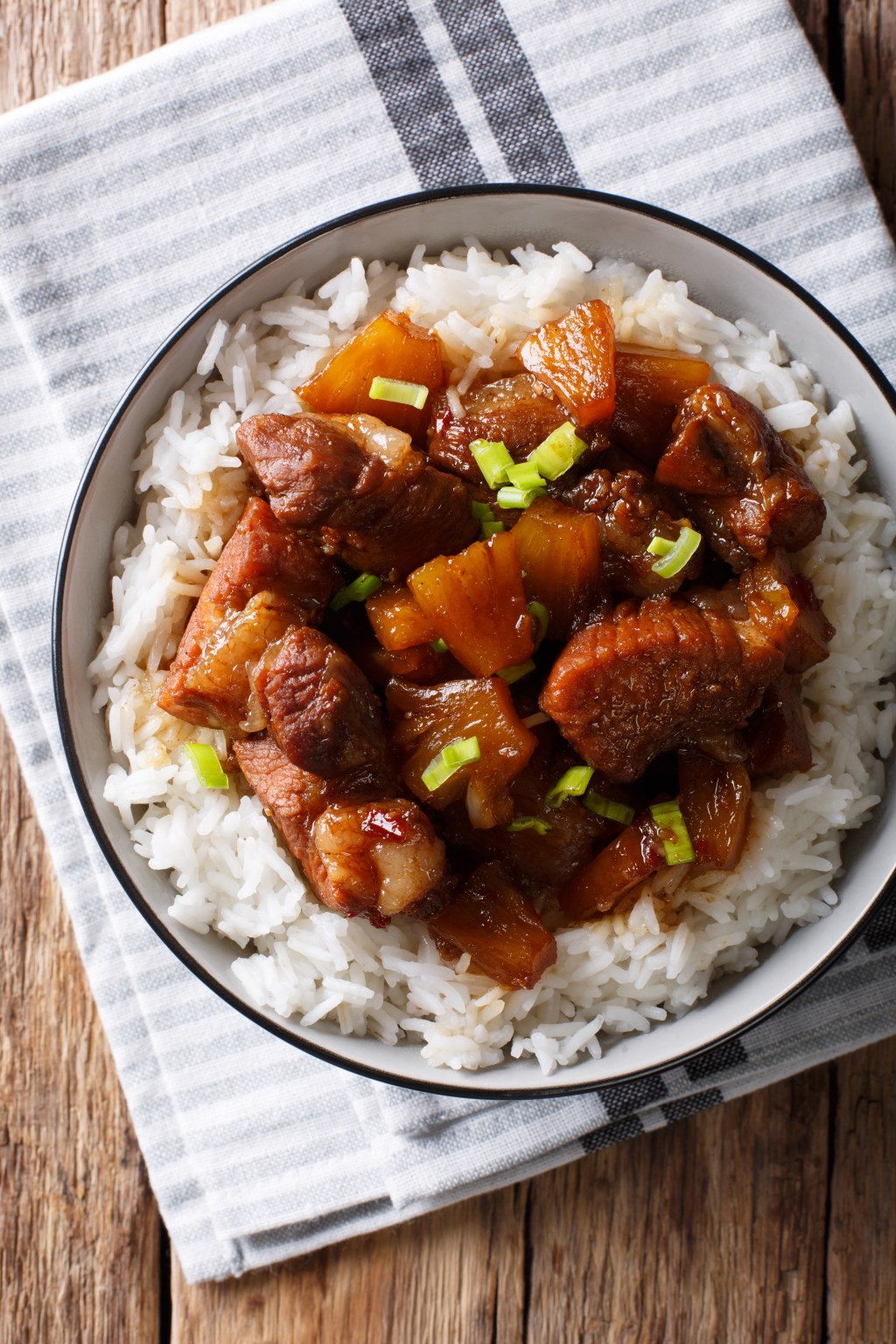
Hamonado is one of the Philippines’ most beloved Christmas dishes, often served during Noche Buena (Christmas Eve dinner). The name comes from hamon, or ham, but this version uses pork belly or shoulder, braised slowly in pineapple juice, soy, and brown sugar until tender and caramelized. Originating from Luzon, it’s a dish that represents the Filipino love of festive sweetness and generosity — warm, abundant, and perfect for sharing. This version keeps the flavors authentic while balancing sweetness for a healthier take on tradition.
Ingredients (Serves 6)
- 1 kg pork belly or shoulder, cut into large cubes
- 1 tbsp olive oil
- 1 medium onion, chopped
- 4 garlic cloves, minced
- 1 cup pineapple juice
- 1 cup pineapple chunks
- ¼ cup gluten-free soy sauce or coconut aminos
- 2 tbsp brown sugar (or coconut sugar)
- 1 tsp black peppercorns
- 2 bay leaves
- Salt, to taste
- (Optional garnish: caramelized pineapple rings or parsley)
Instructions
- Sear the Pork
- Heat olive oil in a pot over medium heat. Sear pork on all sides until lightly browned.
- Add Aromatics
- Add onion and garlic; sauté until fragrant and translucent.
- Simmer the Sauce
- Stir in pineapple juice, soy sauce, sugar, peppercorns, bay leaves, and pineapple chunks.
- Slow Cook Until Tender
- Lower heat, cover, and simmer for 1½ to 2 hours, stirring occasionally, until pork is tender and sauce is thickened to a glossy glaze.
- Serve
- Transfer to a serving platter, spoon over sauce, and garnish with pineapple slices.
Kitchen Equipment
- Large heavy-bottomed pot or Dutch oven
- Wooden spoon
- Knife and cutting board
- Measuring cups and spoons
- Serving dish
Dietary Substitutions & Allergen Swaps
- Low-Sodium: Use reduced-salt soy sauce or coconut aminos.
- Vegan: Substitute pork with firm tofu or tempeh; add mushrooms for umami.
- Low-Sugar: Replace sugar with stevia or omit entirely for natural pineapple sweetness.
- Gluten-Free: Always use certified gluten-free soy or tamari.
Chef’s Tips
- Tenderness Trick: Simmer low and slow — don’t rush the process.
- Better Next Day: The flavors deepen overnight; ideal for make-ahead holiday prep.
- Pineapple Caramelization: For extra flavor, broil pineapple slices before garnishing.
Wine Pairing
Pairs beautifully with light Merlot, Pinot Noir, or Chenin Blanc. Non-alcoholic: sparkling pineapple water, ginger iced tea, or calamansi soda.
Nutrition Facts
Serving Size: 1 cup (approx. 200g)
Servings Per Recipe: 6
| Nutrient | Amount Per Serving |
|---|---|
| Calories | 410 kcal |
| Total Fat | 24 g |
| – Saturated Fat | 8 g |
| – Trans Fat | 0 g |
| Cholesterol | 90 mg |
| Sodium | 680 mg |
| Total Carbohydrate | 18 g |
| – Dietary Fiber | 1 g |
| – Total Sugars | 13 g |
| Protein | 32 g |
| Iron | 2.5 mg (14%) |
| Potassium | 510 mg (11%) |
Frequently Asked Questions
Q: Can I use canned pineapple?
A: Yes, but use natural juice instead of syrup to avoid excessive sweetness.
Q: Can I make this in a slow cooker?
A: Absolutely. Cook on low for 6–7 hours or high for 3–4 hours.
Q: What cut of pork works best?
A: Pork belly offers the richest flavor, but shoulder or loin works for a leaner version.
Q: Can I store leftovers?
A: Yes — refrigerate up to 4 days or freeze for up to 2 months.
Sweet, savory, and celebratory — Filipino Pork Hamonado is the heart of a Filipino Christmas feast. Serve it warm with steamed rice or garlic fried rice and tag @simplycookingx with #GlobalChristmasSeries to share your holiday table!







 Simply Cooking!
Leave a comment