


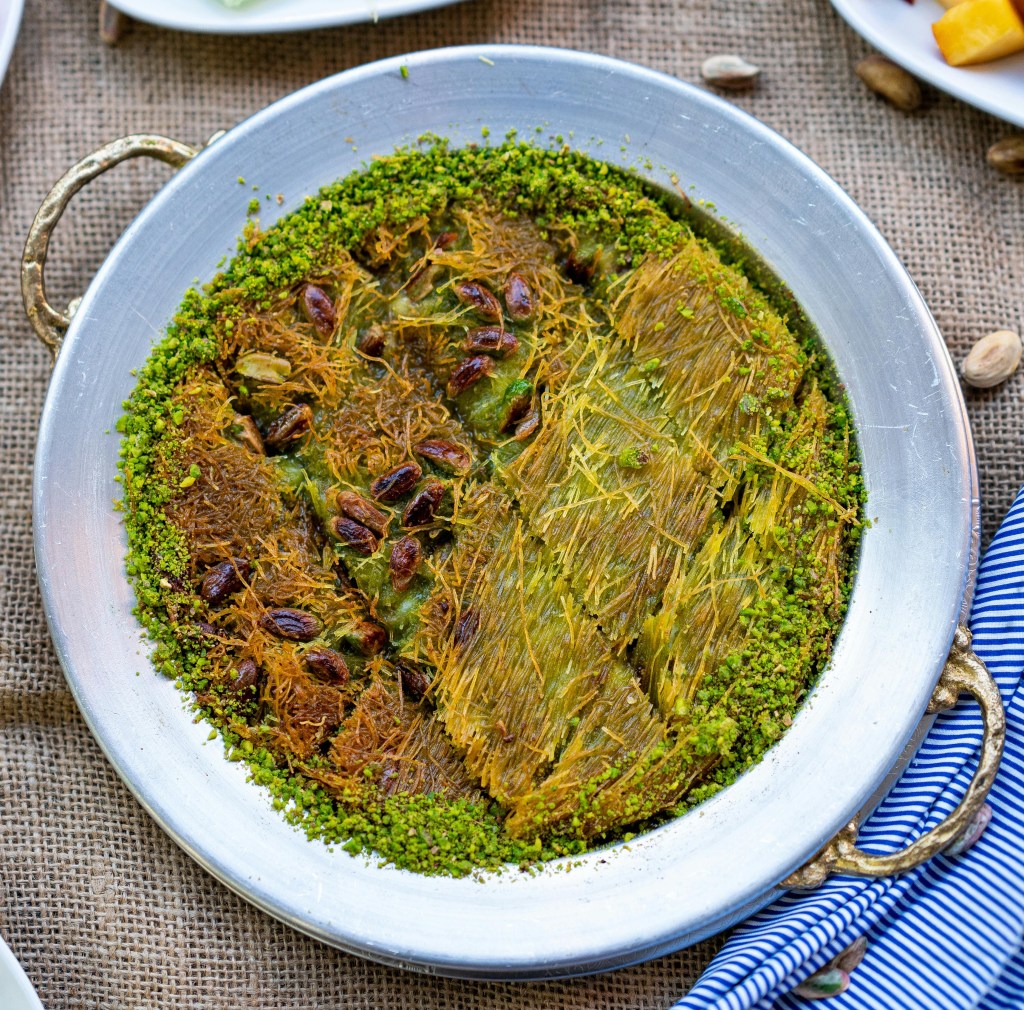
Baklava has a rich history that spans many centuries and cultures, with influences from the Byzantine, Ottoman, Persian, and Middle Eastern cuisines. The earliest known form of baklava likely dates back to ancient Mesopotamia, where layers of bread dough were filled with nuts and honey. Similar desserts were also found in the cuisines of ancient Assyria and Persia. The dessert evolved during the Byzantine Empire (330-1453 AD), where Greek and Roman culinary traditions merged. The development of thin dough sheets, similar to modern phyllo, played a significant role in the evolution of baklava. Baklava as we know it today was further refined in the kitchens of the Topkapi Palace in Istanbul during the Ottoman Empire. The Ottomans perfected the art of layering thin sheets of dough with nuts and sweetening it with syrup or honey. Baklava became a luxurious dessert, served at imperial banquets and religious celebrations. As the Ottoman Empire expanded, baklava spread to various regions, including the Balkans, the Middle East, and North Africa. Each culture adapted the recipe to its own tastes and available ingredients, leading to a wide variety of baklava styles and flavors. Today, baklava is enjoyed in many countries around the world, each with its own unique twist on the classic recipe. In Greece, baklava is often made with walnuts and honey, while in Turkey, pistachios are a popular filling. In the Middle East, rose water or orange blossom water is commonly added to the syrup for a fragrant touch. The history of baklava is a testament to the rich cultural exchanges and culinary evolution that have occurred throughout history. This is pistachio baklava and here’s how you make it!
Nutritional Information (per serving)
Calories: 16-18 kcal
Total Fat: 0.9-1.1 g
Saturated Fat: 0.35-0.45 g
Cholesterol: 1.25-1.5 mg
Sodium: 5-6 mg
Total Carbohydrates: 1.75-2 g
Dietary Fiber: 0.1-0.15 g
Sugars: 1-1.25 g
Protein: 0.2-0.3 g
INGREDIENTS
For the Baklava:
1/2 pound (225g) phyllo dough, thawed
1/2 pound (225g) kataifi noodles, thawed and roughly chopped
2 cups (300g) pistachios, finely chopped
1 teaspoon ground cinnamon
1 cup (225g) unsalted butter, melted
For the Syrup:
1 cup (200g) granulated sugar
1 cup (240ml) water
1/2 cup (120ml) honey
2 tablespoons lemon juice
1 cinnamon stick
1 strip of lemon peel
HERE’S HOW YOU DO IT:
- Preheat the Oven: Preheat your oven to 350°F (175°C).
- Prepare the Pistachio Mixture: In a bowl, mix the finely chopped pistachios with the ground cinnamon. Set aside.
- Assemble the Baklava with Phyllo: Brush a 9×13-inch baking dish with melted butter. Lay one sheet of phyllo dough in the dish, and brush it with melted butter. Continue layering and buttering the phyllo sheets until you have used about half of the pack.
- Add the Kataifi Layer: Spread the chopped kataifi noodles evenly over the layered phyllo, pressing gently. Drizzle with some melted butter.
- Add the Pistachio Mixture: Spread the pistachio mixture evenly over the kataifi layer.
- Continue with Phyllo: Continue layering and buttering the remaining phyllo sheets on top of the pistachio mixture.
- Cut the Baklava: Using a sharp knife, cut the baklava into diamond or square shapes, cutting all the way through to the bottom of the dish.
- Bake: Bake in the preheated oven for about 45-50 minutes, or until the baklava is golden and crisp.
- Prepare the Syrup: While the baklava is baking, combine sugar, water, honey, lemon juice, cinnamon stick, and lemon peel in a saucepan. Bring to a boil, then reduce the heat and simmer for about 10 minutes. Remove the cinnamon stick and lemon peel.
- Pour the Syrup: As soon as the baklava comes out of the oven, evenly pour the hot syrup over the hot baklava. Let it cool completely. The syrup will soak into the layers, giving the baklava its characteristic sweetness.
- Serve: Once cooled, the baklava is ready to serve. It can be stored at room temperature, covered, for several days.
General Tips for Making Baklava
Use Fresh Ingredients: Fresh nuts and high-quality phyllo dough make a big difference in the flavor and texture of your baklava.
Keep Phyllo Dough Moist: Phyllo dough dries out quickly, so keep it covered with a damp cloth or plastic wrap while working with it.
Butter Generously: Brush each layer of phyllo with melted butter to ensure crispness and rich flavor.
Cut Before Baking: Cut your baklava into pieces before baking. This helps the syrup to soak evenly into the layers.
Pour Hot Syrup on Hot Baklava: To achieve the perfect texture, pour hot syrup over the baklava as soon as it comes out of the oven.
Let It Rest: Allow the baklava to rest for several hours or overnight before serving. This gives the syrup time to soak in and flavors to meld.
Variations and Versions
Nut Varieties: Experiment with different nuts like walnuts, pistachios, almonds, or a mix of your favorites.
Spice It Up: Add spices like cinnamon, clove, or cardamom to the nut mixture for added flavor.
Syrup Flavors: Infuse your syrup with flavors like rose water, orange blossom water, or lemon zest for a fragrant twist.
Chocolate Baklava: For a decadent version, drizzle melted chocolate over the top of the baklava after it’s baked.
Vegan Baklava: Use plant-based butter or oil to brush the phyllo layers for a vegan-friendly version.
Roll-Up Baklava: Instead of layering, roll the nut mixture in phyllo sheets and cut them into bite-sized pieces before baking.
Kataifi Baklava: Use shredded kataifi dough instead of phyllo sheets for a different texture.



 Simply Cooking!
Leave a comment