


Moussaka has roots that trace back to the Levant and the Balkans. The modern Greek version was popularized in the 1920s by Greek chef Nikolaos Tselementes, who introduced the béchamel sauce layer, giving it a distinctly Greek identity.
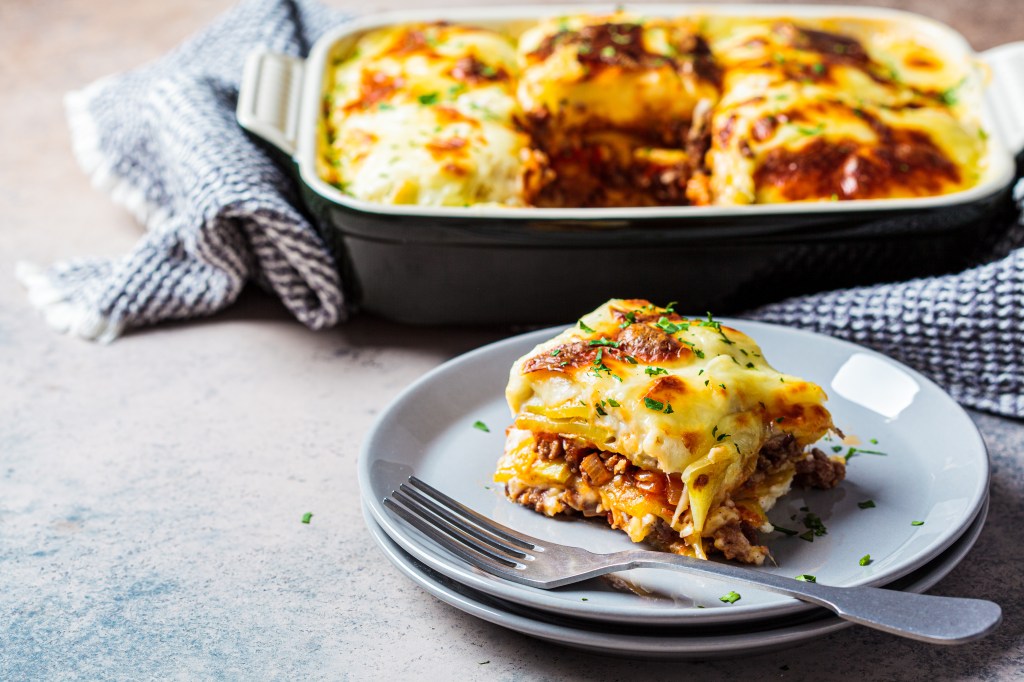
Greek Moussaka is a classic Greek dish that consists of layers of eggplant and potatoes, a rich meat sauce, and a creamy béchamel sauce. It’s a hearty, flavorful casserole often enjoyed as a main course.
HERE’S HOW YOU MAKE IT!
Ingredients
For the Potato Layer
2 large potatoes, peeled and sliced into 1/4 inch rounds
Salt
Olive oil, for brushing
For the Eggplant Layer
2 large eggplants, sliced into 1/4 inch thick rounds
Salt
Olive oil, for brushing
For the Meat Sauce
2 tablespoons olive oil
1 large onion, finely chopped
2 garlic cloves, minced
1 pound ground beef or lamb
1 can (14.5 ounces) diced tomatoes
2 tablespoons tomato paste
1/2 cup red wine
1 teaspoon dried oregano
1/2 teaspoon ground cinnamon
Salt and pepper, to taste
For the Béchamel Sauce
4 tablespoons butter
1/4 cup all-purpose flour
2 cups whole milk, warmed
1/4 teaspoon ground nutmeg
Salt and pepper, to taste
2 large eggs, beaten
1/2 cup grated Parmesan cheese
For Assembly
1/2 cup grated Parmesan cheese
1/4 cup breadcrumbs
Instructions
Preparing the Potatoes
- Preheat your oven to 400°F (200°C). Brush the potato slices with olive oil on both sides and arrange them on a baking sheet.
- Bake for about 20 minutes, flipping halfway through, until they are tender and slightly golden. Set aside.
Preparing the Eggplant
- Sprinkle the eggplant slices with salt and let them sit in a colander for 30 minutes to draw out excess moisture. Rinse and pat dry.
- Brush the eggplant slices with olive oil on both sides and arrange them on a baking sheet.
- Bake for about 20 minutes, flipping halfway through, until they are tender and golden. Set aside.
Making the Meat Sauce
- In a large skillet, heat the olive oil over medium heat. Add the onion and garlic and sauté until softened, about 5 minutes.
- Add the ground beef or lamb and cook until browned, breaking it up with a spoon as it cooks.
- Stir in the diced tomatoes, tomato paste, red wine (if using), oregano, cinnamon, salt, and pepper. Simmer for 20-25 minutes, until the sauce thickens. Set aside.
Making the Béchamel Sauce
- In a medium saucepan, melt the butter over medium heat. Whisk in the flour and cook for 1-2 minutes, until lightly golden.
- Gradually whisk in the warmed milk, continuing to whisk until the sauce thickens and comes to a simmer.
- Remove from heat and stir in the nutmeg, salt, and pepper. Let it cool slightly before whisking in the beaten eggs and Parmesan cheese.
Assembling the Moussaka
- Preheat the oven to 350°F (175°C).
- In a greased baking dish, layer the potato slices evenly on the bottom.
- Add a layer of half the eggplant slices on top of the potatoes.
- Spread the meat sauce evenly over the eggplant.
- Add the remaining eggplant slices on top of the meat sauce.
- Pour the béchamel sauce over the top layer of eggplant, spreading it evenly with a spatula.
- Sprinkle with the remaining Parmesan cheese and breadcrumbs (if using).
Baking the Moussaka
- Bake in the preheated oven for 45-50 minutes, until the top is golden brown and bubbly.
- Let the moussaka cool for at least 15 minutes before slicing and serving.
VARIATIONS
1. Traditional Greek Moussaka
Components: Layers of eggplant, ground meat sauce (usually beef or lamb), and a creamy béchamel sauce.
Additions: Some versions include a layer of potatoes at the bottom.
2. Turkish Moussaka (Musakka)
Components: Generally lighter and often made without the béchamel sauce.
Ingredients: Layers of eggplant, zucchini, tomatoes, green peppers, and ground meat.
Cooking Method: The vegetables and meat are cooked together in a pot, making it more like a stew.
3. Balkan Moussaka
Components: Layers of potatoes, ground meat, and eggs.
Variations: In Bulgaria, it is common to include a yogurt and egg mixture poured over the top.
Differences: This version often does not include eggplant.
4. Middle Eastern Moussaka
Components: Similar to the Greek version but can be vegetarian.
Ingredients: Eggplant, chickpeas, tomatoes, and sometimes lamb.
Serving Style: Often served cold or at room temperature as a mezze (appetizer).
5. Vegetarian Moussaka
Components: Layers of vegetables and a béchamel sauce.
Ingredients: Eggplant, zucchini, potatoes, lentils or mushrooms instead of meat.
Flavor: Similar seasoning as the traditional moussaka with added herbs for extra flavor.
6. Vegan Moussaka
Components: Similar to vegetarian but with vegan substitutes.
Ingredients: Eggplant, zucchini, potatoes, lentils, and a béchamel sauce made with plant-based milk and butter.
Cheese Substitute: Nutritional yeast can be used to add a cheesy flavor to the béchamel.
7. Seafood Moussaka
Components: A creative twist using seafood.
Ingredients: Layers of eggplant, shrimp, crab, or other seafood, and a béchamel sauce.
Flavor: Enhanced with seafood-friendly spices and herbs.
8. Potato Moussaka
Components: Uses potatoes prominently along with the traditional layers.
Ingredients: Layers of thinly sliced potatoes, ground meat, and béchamel sauce.
Texture: The potatoes add a hearty and starchy texture to the dish.
9. Mediterranean Moussaka
Components: Incorporates a wider range of Mediterranean vegetables.
Ingredients: Eggplant, zucchini, tomatoes, peppers, and a mix of ground meat.
Spices: Often includes a mix of Mediterranean herbs like oregano, basil, and thyme.
10. Low-Carb Moussaka
Components: Aimed at reducing carbohydrates.
Ingredients: Eggplant, zucchini, ground meat, and a low-carb béchamel sauce made with almond flour or other low-carb thickeners.
Serving Style: Maintains the traditional flavor while being more diet-friendly.
Tips for Making Variations
Substitutes: Use different vegetables or legumes to cater to dietary preferences.
Spices: Experiment with spices to bring in flavors from different cuisines.
Cheese: Try different types of cheese in the béchamel sauce for unique flavors.
Cooking Methods: Some variations can be made into a stew or baked casserole depending on preference.
These variations showcase the versatility of moussaka and its ability to adapt to different ingredients and culinary traditions. Each version brings its unique twist to this beloved dish, making it a favorite in many cultures.






 Simply Cooking!
Leave a comment