


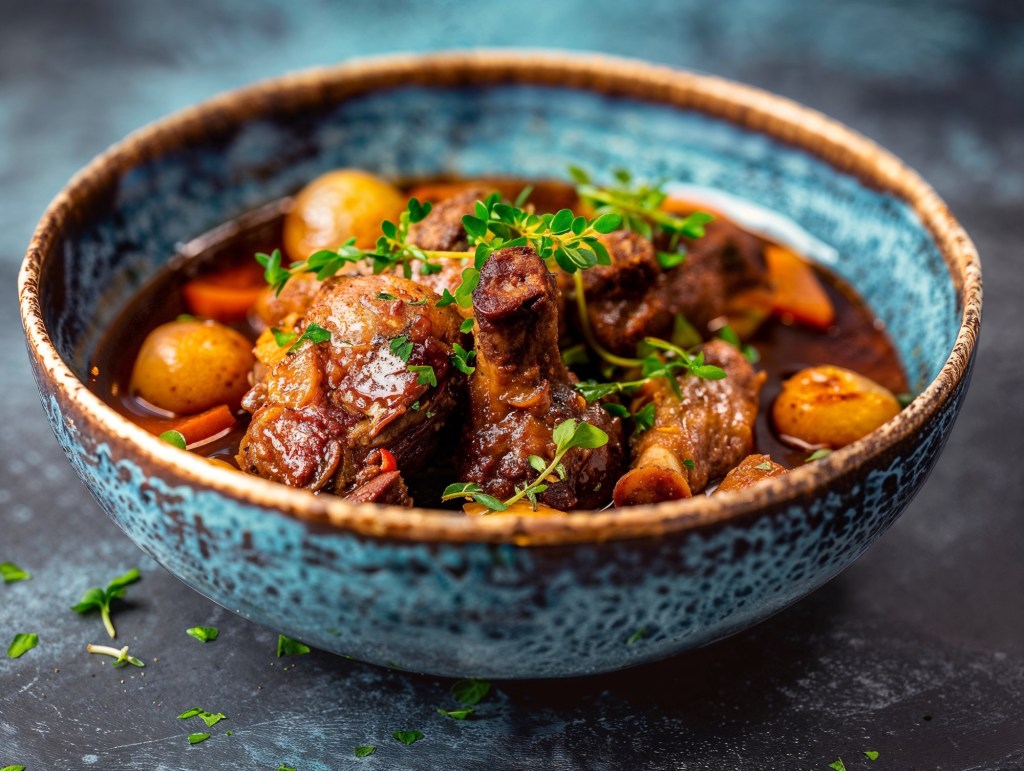
Coq au Vin is a traditional French dish that translates to “rooster in wine.” It typically involves slow-cooking chicken (originally rooster) in red wine, along with ingredients such as bacon, mushrooms, onions, garlic, and sometimes carrots. The dish is renowned for its rich, deep flavors and tender meat, achieved by braising the chicken in wine and aromatics over a long period. It is often served with mashed potatoes, crusty bread, or over rice, making it a hearty and comforting meal that showcases classic French culinary techniques.
Ingredients
1 whole chicken (about 3-4 pounds), cut into pieces
Salt and black pepper to taste
4 ounces bacon, diced
2 tablespoons olive oil
1 large onion, chopped
2 carrots, chopped
2 cloves garlic, minced
2 tablespoons all-purpose flour
3 cups red wine (such as Burgundy or Pinot Noir)
1 cup chicken broth
2 tablespoons tomato paste
1 bay leaf
3-4 sprigs fresh thyme
1/2 pound mushrooms, sliced
1 tablespoon butter
Fresh parsley, chopped (for garnish)
Instructions
- Season the chicken pieces with salt and pepper.
- In a large Dutch oven or heavy-bottomed pot, cook the diced bacon over medium heat until crispy. Remove the bacon with a slotted spoon and set aside, leaving the bacon fat in the pot.
- Add the olive oil to the pot with the bacon fat. Brown the chicken pieces in batches until they are golden on all sides. Remove the chicken and set aside.
- In the same pot, add the chopped onion and carrots. Sauté until the onions are translucent. Add the minced garlic and cook for another minute.
- Sprinkle the flour over the vegetables and stir well to combine. Cook for 2-3 minutes to remove the raw flour taste. Slowly pour in the red wine, stirring constantly to avoid lumps. Add the chicken broth and tomato paste, stirring until the sauce is smooth.
- Return the browned chicken pieces to the pot. Add the bay leaf and fresh thyme sprigs. Bring the mixture to a simmer, cover, and cook on low heat for about 1.5 to 2 hours, or until the chicken is tender and cooked through.
- While the chicken is cooking, melt the butter in a skillet over medium heat. Add the sliced mushrooms and sauté until they are browned and tender. Set aside.
- Once the chicken is cooked, remove the bay leaf and thyme sprigs. Stir in the sautéed mushrooms and the crispy bacon. Adjust seasoning with salt and pepper if needed.
- Serve the Coq au Vin hot, garnished with chopped fresh parsley. It pairs wonderfully with mashed potatoes, rice, or crusty French bread.
Tips for Cooking Coq au Vin
Use a Good Quality Wine:
The wine is a central component of Coq au Vin, so use a good quality red wine, such as Burgundy or Pinot Noir. Avoid using cooking wines, which often contain added salt and preservatives.
Marinate the Chicken:
If possible, marinate the chicken in the red wine with some herbs and garlic for a few hours or overnight. This enhances the flavor and helps tenderize the meat.
Brown the Chicken Well:
Take the time to brown the chicken pieces thoroughly on all sides. This step adds depth and richness to the dish through the Maillard reaction, which develops complex flavors.
Use a Heavy-Bottomed Pot:
A Dutch oven or heavy-bottomed pot is ideal for this dish as it retains and distributes heat evenly, ensuring the chicken cooks uniformly.
Don’t Rush the Cooking Process:
Coq au Vin is best when cooked slowly. Allowing the chicken to braise gently in the wine over low heat ensures tender, flavorful meat and allows the flavors to meld beautifully.
Cook the Vegetables Separately:
Sauté the onions, carrots, and mushrooms separately before adding them to the pot. This helps to develop their flavors and prevents them from becoming mushy.
Use Fresh Herbs:
Fresh thyme, bay leaves, and parsley add vibrant flavors to the dish. Tie the thyme and bay leaves into a bouquet garni (herb bundle) for easy removal before serving.
Add Depth with Tomato Paste:
A small amount of tomato paste adds richness and depth to the sauce without overpowering the wine.
Skim Fat:
During cooking, skim off any excess fat that rises to the surface. This keeps the sauce from becoming too greasy.
Adjust Seasoning:
Taste and adjust the seasoning with salt and pepper towards the end of cooking. The flavors concentrate as the dish cooks, so wait until the end to make final adjustments.
Rest the Dish:
If possible, let the Coq au Vin rest for a day before serving. The flavors develop and meld even more with time, making the dish even more delicious.
Pair with Complementary Sides:
Serve Coq au Vin with mashed potatoes, crusty French bread, or buttered noodles to soak up the delicious sauce. A side of green beans or a simple salad can add a fresh contrast to the rich flavors.






 Simply Cooking!
Leave a comment